
PAUL HIMMEL | Needlepoints | AL’S OFFICE
April 19 - May 22, 2026
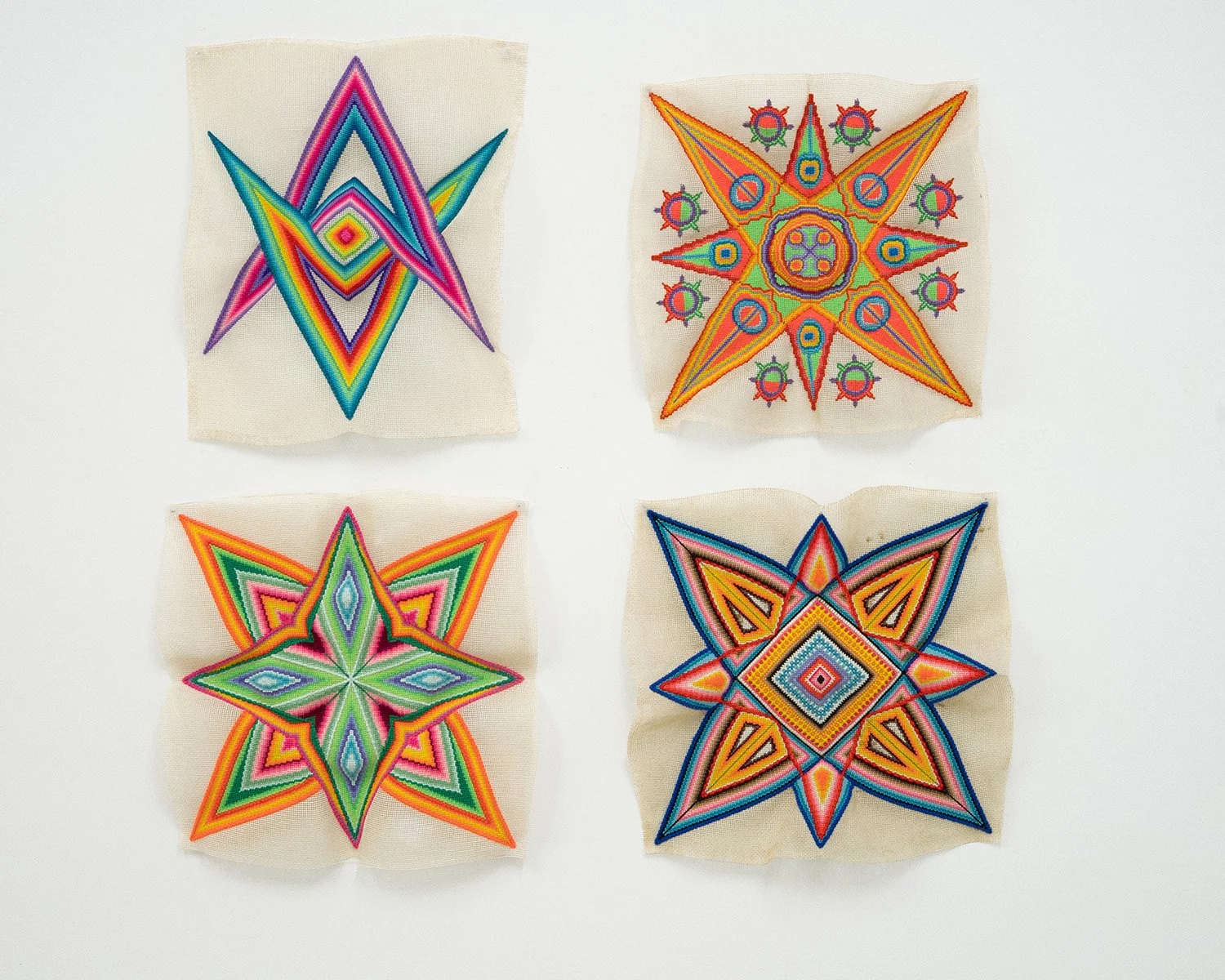
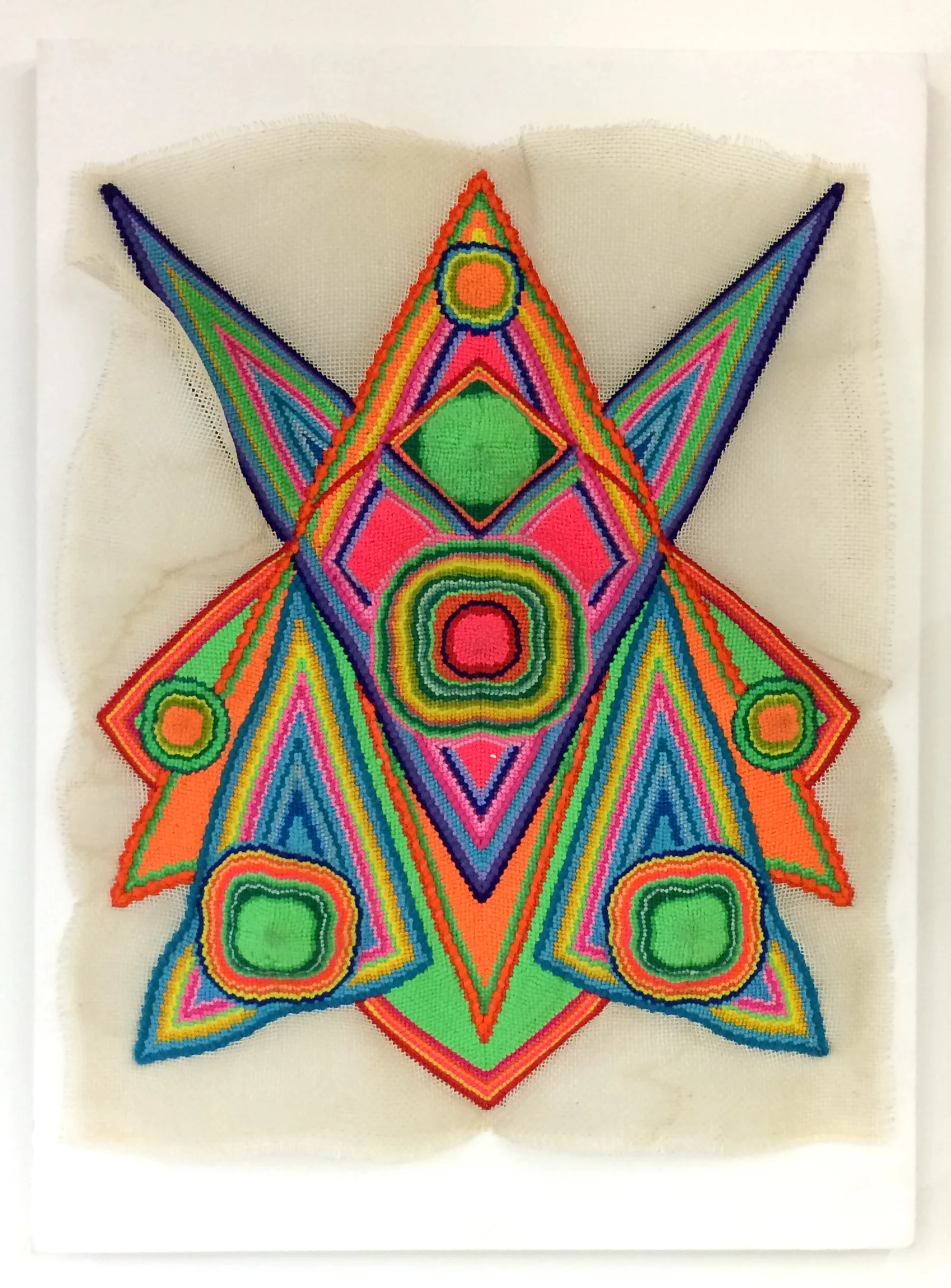
After abandoning his career as a photographer and becoming a psychotherapist in about 1970, Paul Himmel began to make needlepoints. When he was a child, his Ukrainian mother had sewn large needlepoint panels with designs based on vernacular landscape paintings. Now her son adapted the medium to reflect his lifelong interest in geometric design. He loved the garish colored yarns that he found in New York’s Garment District and was especially intrigued to discover that he could create three-dimensional forms by varying the tension of the thread. The format he arrived at subverted the functionalism of traditional needlepoint by leaving areas of scrim exposed.
Paul Himmel (1914-2009) was a New York photographer, largely known for personal reportage work done in the late 1940s and early 1950s. In 1954, he published Ballet in Action, with photographs of the New York City Ballet that captured the dancers’ movement. His photographs also appeared in MoMA’s popular and influential “Family of Man” exhibition (1955). He was married to the fashion photographer Lillian Bassman. Along with Richard Avedon, Irving Penn, and many other prominent photographers, their careers were propelled by the legendary Russian émigré art director and teacher Alexey Brodovitch.
PAUL HIMMEL

As a photographer, Paul Himmel (1914-2009) was in a constant state of conflict over his chosen medium, struggling to use a still camera to capture phenomena that fell outside the normal visual perception. When he finally abandoned photography at the end of the 1960's, he gravitated toward unorthodox art forms that gathered together many strands of his interests, obsessions, and experiences. A large series of needlepoints adapted a craft that his Russian seamstress mother had used for pictorial panels to his own passionate exploration of grid-based, or more precisely, graph-paper-based, geometric abstraction and psychedelic color. A set of sculptures utilizing flower frogs and beads harkened back to his early days as a biology teacher and his fascination with such biological forms as radiolarians and sea urchins. Together, these projects offered Himmel an opportunity to explore the two kinds of symmetry -- bilateral and radial--that are most common in nature, using popular mass-produced materials, like synthetic yarns and gaudy plastic beads, that he loved and shopped for avidly in New York's Garment District and around Canal Street.
Quisque iaculis facilisis lacinia. Mauris euismod pellentesque tellus sit amet mollis.